Rates have risen again this autumn on both sides of the Atlantic, and headlines are quick to warn that “money is drying up”. For businesses looking to raise capital, it pays to separate two very different situations.
Expensive money
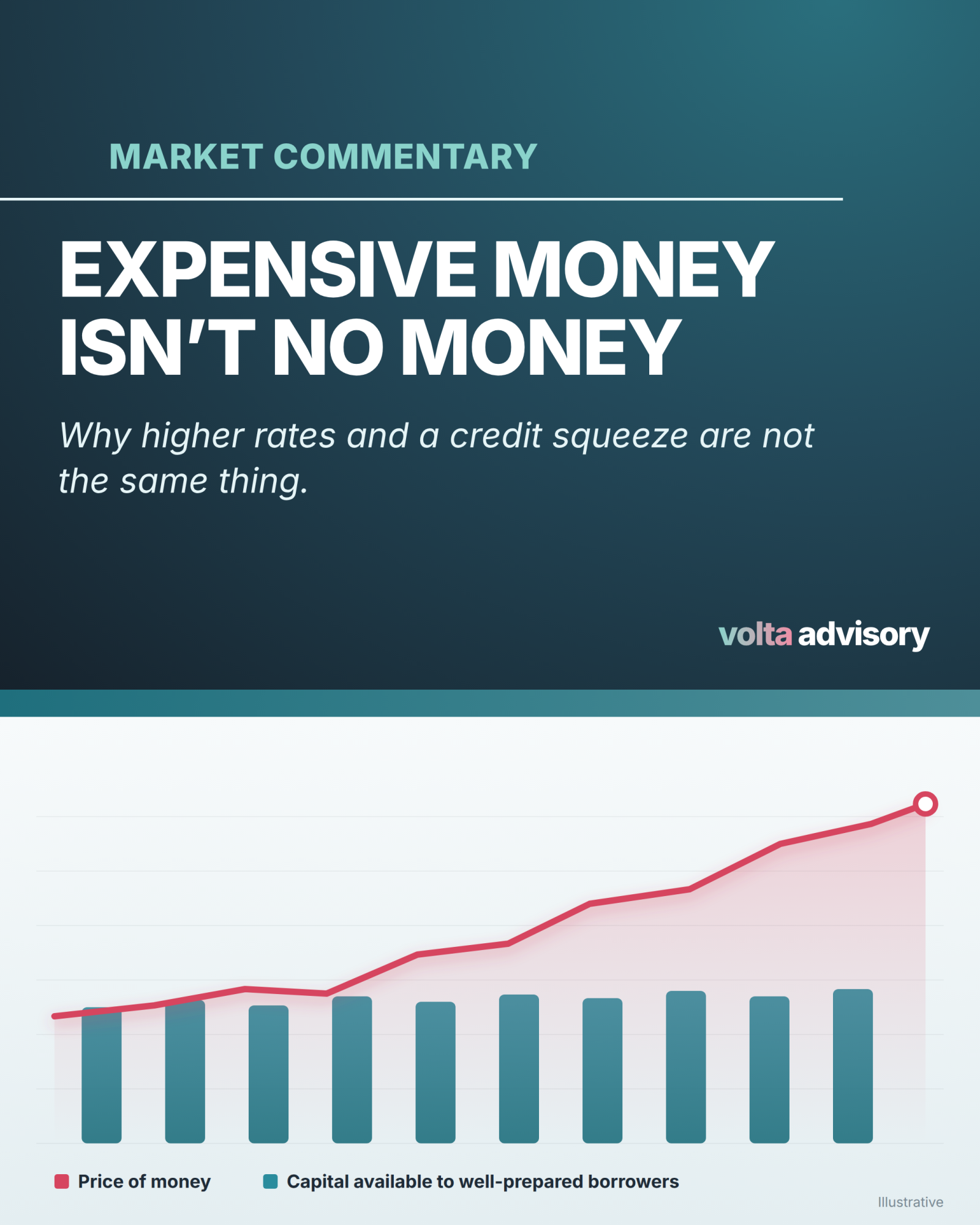
When central banks raise rates, the price of capital goes up. Loans, trade lines and bonds cost more. But lenders and investors are still active: they simply ask for a higher return, and look more closely at who they lend to. This is the environment businesses face today.
No money
A credit squeeze is different. Lenders pull back altogether, whatever the price. Deals stall, lines are cut and even strong borrowers struggle to refinance. These episodes are usually triggered by a shock to the financial system itself, not by a rise in rates alone.
Why the difference matters
In an expensive-money environment, the winners are the best-prepared borrowers. Clean financials, a clear use of funds and the right structure can make capital both available and affordable. Structures such as trade finance, receivables finance or guarantee-backed facilities can also lower the cost, by giving lenders more comfort.
In a credit squeeze, the priority shifts to securing liquidity and relationships before anything else.
Volta’s view
Today’s market is expensive, not closed. Investors are still backing African businesses, but they are selective. The cost of waiting is rising, so businesses with a financing to close should prepare early and choose their structure carefully.
Volta Advisory provides general information only, not investment advice.